Sunday, 24 May 2015

2005: the year it all went a bit wobbly

I have a pet theory: the musical landscape was irrevocably altered in 2005, and since then no new scene has managed to get "Big". I appreciate that it's a controversial comment to make, and that it also happens to be around the time science says I stop listening to new music, so I want to make it clear that I'm not saying good new music stopped being made then (because you can find awesome new music everywhere). I'm simply saying that "Big" slowed down as being possibly for new acts and scenes, at least in the context of what had happened before. And why am I saying 2005? Because that was the year that YouTube landed, marking it as the year that the shared cultural youth experience (one of the most vital things for new things to become Big by) finally got a nail in the head and that scarcity in youth culture stopped being a thing.

Back in the day when the internet was just this weird thing that either hadn't been invented by computer visionaries, was a wild idea of computer science theorists, or was that strange thing the computer students swore they weren't using to look at porn with, there was a high cost of entry into any youth culture, driven by scarcity of the resources relating to that culture. For example, if you wanted to listen to music you had to go and buy the record, or at the very least the tapes to copy it from someone who had bought the record, and you had to buy the means to play that record, But even if you had that record you were limited on where you could play it and you were limited by possibly not even knowing that the record existed or how to contact the people who sold the record. Similarly if you wanted to join a scene you had to spend a large amount of time finding out that the scene existed, where it was, and then you would have to go along to it with no real clue what the culture was like and with the likelihood of sticking out like a sore thumb. If you then wanted to join that culture you would have to invest a considerable amount of funds and effort on buying the uniform of that scene, mostly due to the small number of places actually selling the clothing in question. To put it bluntly: it was a total arse, and because it was a total arse a lot of people didn't move that far outside of their youth scene, even before the tribal violence and rejection fears of the times. 

Additionally there were very few media outlets at all for youth music of any kind, let alone whatever scene you may have happened to have been into. On the telly there was Top Of The Pops, and at any given time one or possibly two other music programs (including "Youth TV", which doesn't really count as that has always been terrible) which generally compressed the whole world of music into one show so your rockers and your indie kids and your ravers would all be watching the same show, and 'booo'ing and 'yayyy'ing along like football fans because they all had a lot of stuff that you didn't really like but were willing to watch through for the one or two acts that you did. But even then you would be more likely watching because it was an act from the scene you liked rather than a bad you actually raved on about, with you watching to represent and go "more of this kind of thing please!". This is why The Stone Roses and The Happy Mondays on the same Top Of The Pops was heralded as the triumph of Madchester when they sound like two difference scenes, why Blur vs Oasis was the battle of Britpop rather than retro-pop vs indie-rock, why Rage Against The Machine got big with the rave party kids via The Word and why everyone with a leather jacket I knew watched Slipknot literally destroy the cameras on TGI Friday (even though half of them couldn't stand them). Yes, from the mid 90's if you had access to the mysterious "cable TV) you could watch MTV but that basically meant "20 hours of Radio One a day, with one or two specialist genre shows a night", so if you're scene wasn't flavor of the month then you still had the bottleneck happening where everyone on your scene was watching the same thing.

Now, whilst this may all sound like a pain (it was) those bottlenecks were also very useful because it gave "Bigness" and avoided the cultural balkanisation and scene hopping that is now happening (two contradictory but linked concepts). Because you had a lot of people knowing the same songs (regardless of if it was their thing) the songs could get "big" and get a decent floor going in the club, because you were listening to a lot of music you would never think of listening to a band could find an listeners from a wider audience, because niches were part of a larger overall scene you had more people turning up to broad interest events (well, at least outside of London) so there was more crossover, and because you had to go an engage in a scene to discover things you actually had to get out there and partake of it. From my personal prospective this gave us things like the genre spanning Llollapalooza and leather jackets turning up at raves because The Prodigy had thrown in some guitars and the goths had dug a few Ministry Albums,(then again it also gave us the ubiquitous "Crap Thrash Hour" at the start of every rock club so it may not of all been good). New sounds, new scenes, new tastes could gain traction due to all the reasons listed above.

Then 2005 happened, and Youtube removed the first bottle neck of scarcity. Very rapidly any music you wanted to hear would be accessible to you in minutes, your very own Top Of The Pops playing just what you want whenever you want it. So people ended up listening to just what they wanted, because if you just wanted to listen to hardbag or pornogrind you could do, all day if wanted. You could go as niche as you want and never have to touch anything else. Then MP3 players and broadband became mainstream and took down the second bottleneck, meaning that you could download a bands discography in less time than it would previously of taken to find their single in a shop and you could carry it with you everywhere you wanted with no compromise of availability. Then eBay removed the bottleneck of stylistic scarcity, by making all the clothing available. You didn't have to live near or travel to that one specific store that sold the clothing you wanted, you could sit at home and have 5 stores come to you (and at competitive prices!). All of this was aided by Google having taken down the final bottleneck of knowledge scarcity, so if you wanted to know anything about a scene, from what was happening where to where you could hire a venue to how to spread the word to what was trendy and wearable, you could get it in a couple of minutes.

This was, and will continue to be, mostly awesome. New things to listen to, new places to go, new sounds to hear.

But not all of it is that great, as with the removal of scarcity meant there was no underground for this to dwell in for all that long before they go prematurely big. Or, at the very least, latched onto an chewed through by the novelty hungry machine that was the media. As more and more obscure things came into sight they were all now given their moment in the sun, but often before they could organically grow enough of a following to survive that moment or capitalize on it. Scenes didn't have enough time to become actually big before being pronounced the Next Big Thing and then tossed aside as the long queue of Next Big Things was worked through as rapidly as possible. Things also haven't been helped by the increased discover-ability to the listening public has come along an increased dispensability, as it too goes through a thirsty journey towards novelty and freshness. It is perfectly possible to hear about a new scene on the Monday, have listened to the music on the Tuesday, to have sourced all the fashions on the Wednesday, and know about all the events on the Thursday. Weather someone will then actually go to the event on the Friday is up for debate, as they could easily have moved onto the next thing before then. Scene-hopping and a cultural flatness brought on by observing rather than engaging is developing, you don't even have to go to the shows any longer as you can see it through someone else’s phone video so how can a new scene maintain the excitement needed to become "big" when all of it's mystique is gone at the very first whiff of discovery?

Instead of bigness we have, in most cases, an outbreak of smallness. Niches and specific scenes are totally possible because you can find enough people to keep them going, which is a great thing in many ways but it also leads to the balkanisation that was described above and a staleness that people don't seem to quite get. For example I recently had a friend make the very reasonable and true comment that nothing new had happened in Classic Metal for years now, but I had to point out that that was because all the things that could happen with it had happened about 20 years ago with Nu Metal. With any kind of music its the simple case that if you're going to have a genre described by standing still and a scene made up of people who want a very specific thing it can't evolve or significantly grow because it's whole reason to exist is it's constraints, it's like looking at Baroque and going "well I like it but can we throw in some synths and blastbeats?" The availability of the niche scene has created its own bottleneck where things can't evolve without having to exit the scene, and because there isn't as much group experience available it's not by gathering more people around it but by going and creating it's whole own new scene.


The fact that hardly any new acts that could authentically be described as "underground" are making it into the charts (even the previously awesome 40 to 20 region) is testament to this by itself, with the aging of the headline acts at underground events giving further fuel to it. And it's only going to get worse, as the money is falling out of music so bands and events have less ability to hang around that long and more intensive to find and focus on a specific market. The removal of the bottlenecks has leveled the playing fields, it's just that it appears to have done it by driving things down rather than bringing everyone up. This is why, more than ever, it's important to get out there and represent not just your particular scene but the broad umbrella scene that it came from, to help and keep everyone afloat. Plus, you never know: you might hear something you like but never thought of listening to before.

Monday, 4 May 2015

Decades are not genres

Of the many things about the modern music scene that really piss me off (trust me, there are plenty of them) my single most consistent gripe has been people's usage of decades to define genres of music. It's a habit that has been around since the 80's (IMO pushed along by The Rock And Roll Years, possibly the UKs biggest contribution to the rise of retro culture) even though it is a term that says nothing of any actual value, unless you use it as a highly weighted code. Actual genre terms can be a highly useful tool to give a rough description of what you can expect to hear and the intent of the content, however the most you can ascribe to a decade is the kind of instruments and recording technology that was available and, broadly speaking, what music hadn't happened until that point. These are not very useful for what the music actually is, especially when you take into account what you are actually trying to say.

A decade in pop culture/pop music is, if people are honest, an incredibly long time. Hundreds of  thousands of songs get released in a decade (possibly millions), whole scenes will rise and fall, the zeitgeist will move and mutate beyond all belief. Even if you look a headline acts they don't have half the impact people think they do, Elvis had a career from 53 to 77, but was only culturally relevant for 5 years before becoming a re-run pop-has-been (all be it with some outbreaks of performances and songs) by joining the army, so he doesn't count as being "so 50's" even if you do ignore all the folk music going on around him. The Beatles are constantly considered one of the most "60's" bands ever but were only around for 7 years in the public eye and had a massive contrast in their works. You can't even describe "Sgt Pepper's" as 'the sound of the 60's, as that was only released in 1967. The 70's pretends to be chintz-pop and prog/stadium, but it was also a lot of pub/punk/blues rock and the influence of soul and reggae. The 80's had "New Romantics" for about 3 years, but that covers everything from The Blitz-Kids to Post-Punk to Plastic-Soul so is neither that big a chunk of the decade or that definable a thing, and it totally ignores the nuclear impact of rap, As you go up the timeline towards things just get more cluttered, as recording, promotion, and distribution costs go crashing down and scenes can be created around thousands and eventually hundreds of people from around the globe. Any attempt to encapsulate even a five year period into "a defining theme" is going to fail, hard, as there are just too many sounds and too many intentions going on, so how you are going to double that is anyone's guess.

Having said that it's always possible to go "oh, well I mean the music that was in the charts", but that doesn't work either once you get around to looking at the histories. The bulk of the charts has always been made up of either generic pap that is indistinct enough so as not to cause any offence (and thus noone in their right mind will listen to it again once it's done it's job) or things distinct enough from the rest to be remembered but too much of their own thing to be able to form into a cohesive narrative of what was happening at the time. It's also almost always utterly different to the music that will eventually be seen as important or significant in that time period. For example on sales The Sound of Music is the single most 60's album ever.

What you need to do to use a decade of as a genre is to use it as a code, and what you are using it to do is say "This is how I wanted that period to be, even though I know damn well it wasn't". It's a willful rejection of what actually happened and a replacement of it with your own 'best of' collection (much like all of the retro-scene). It's also an attempt to gain authenticity for your choice, to empower your selection as the most valid version of what happened. It's an attempt to gain simplicity, to reject other songs as not passing the mark so requiring rejection from the records. It's also quite often an attempt to replicate the youth that you miss the most, because everyone is convinced that the music they listened to between 14 and 23 was the most authentic thing ever. And, yes, it's also a quick and simple marketing code to enable folks to go "generic collection of pop you heard from time X", and when have marketing folks ever worried about the terms they use being utterly nonsense?

So is there ever a time to use a decade as a genre? Yes, whenever you are using it to describe a specific style or sound. If you go "Oh, I mostly do 70's ska and 80's electronic" then that actually says something useful and accurate about what you listen to. It shows a distinction, a vintage, and a musics place within the wider context. It also shows that you know what you are talking about, that you care about your music. Because there is nothing wrong with old-school music I listen to them all the time), but there is something about not giving them the respect that they deserve.

Tuesday, 31 March 2015

Legally mandated post about Tidal

Tense moments at the Top Gear auditions.
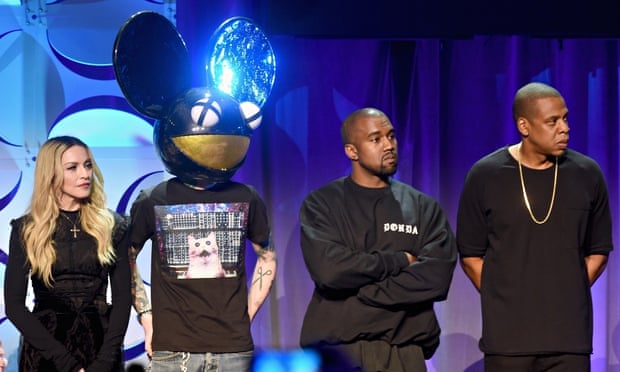
Upon it's launch, back in the mists of October 2014, Tidal was a brave streaming site with the novel idea of offering really high quality music, rather than the perfectly serviceable bitrates offered by the myriad of other streaming services all desperately trying to be the next Spotify. Then it was bought by Jay-Z, and that apparently made it even more interesting a contender to the title of "The Next Spotify" as the world plus it's dog lost it's collective shit about a business man with a portfolio including footwear, video games, champagne, and the occasional ground breaking album, decided to get a slice of the streaming pie. Then they gathered their collective shit and lost it again when he and around a billion dollars worth of close friends did a fancy launch of the service, desperately screaming to the world "This Is The Next Spotify!".

And it's all very lovely, all very impressive, Madonna got to be a briefly erotic granny, there was a lot of talk about paying artists more money than the other services (mostly by charging twice as much for in subscription as everyone else), and given that Mr Carter is somewhat of the entrepreneur it's going to make money. But will it conquer the world? Nope, I really don't think it will, because it's missing out on a couple of key things.

Firstly it's claim of being better for the musicians, by boasting about how much it will pay the artists. This is actually somewhat misleading, as it will pay The Rights Holders more than other services. If you are an artist who owns their recordings then you are going to be doing good, however a lot of people aren't on that great a contract when it comes to streaming so until they get those changed they will mostly be making not that much times two. Don't get me wrong, double is good. But when it's double of almost bugger all once the record label has taken the cash it's not really that awesome, assuming that Tidal can get enough subscribers which it intends to do though sound quality and guilt trips.

The sound quality thing is a curious "and" for me, as it's a kind of pointless exercise on a couple of fronts. If you are streaming at home then the other services product is available at sufficiently high quality as it is that you won't really notice the difference (especially when with high quality content you rapidly reach a point where the speakers rather than the source define a lot of what you hear). If you are streaming on the go then high-quality means lots of data means a service that's going to eat your monthly plan and/or your battery, assuming that you can connect to a solid enough signal to get the stream onto your phone. So you basically have something that you can already get at home via other services or that you are going to have to not use to it's full extent if you are on the go. This is before you reach the question of "can the listener really hear the difference?" which isn't being snobby but repeated experience of no-one I've meet really being able to tell if something is over 300kbps MP3 quality unless they really, really, concentrate very hard. I'm sure someone with a couple thousand pounds of audio equipment in their lounge would be able to tell the difference, but at that point you have to ask 'why haven't they got the CD, as that will always sound better'? And yes, you can download and listen offline, which is now basically the standard anyway and is done at perfectly acceptable quality levels by everyone else). BTW if you think you can tell the difference then take the test.

As the for the guilt trip? Given how much they go on about the artist and the way they "didn't like the direction the music was going" then it's clear that they are trying to attract the "real" music fan, by which they mean 'people who are willing to pay more for their music' and 'anyone who doesn't use those other, cheaper, nasty exploitative services'. Right... because history has proven that the average internet user is always willing to listen to moral arguments when faced with the choice of free-by-piracy or expensive-through-unnecessary-purchase. I can totally get that they are going to try for encouraging the fans, and week long exclusivity contracts, but other services had to keep their costs low for the single reason of the public's unwillingness to pay and I don't think having some of the richest starts in popular music standing in a line to go 'please, we need more cash!' is really going to help things. Maybe if they head a couple of unknowns or not so massive names on there as well it would have been different, but right now it's hardly presenting a radical redistribution of wealth that it's proportioning to be.

So, will it work? Yes, it'll work. There is enough artistic weight behind it and Jay-Z is a great businessman who is brilliant at PR. But I can't see it becoming gigantic, and I certainly can't see it becoming the next Spotify. It will become, gradually, a premium option, something for people who want to show their support or opulence off with. It'll find an audience of it's own and that will grow, but the chances of mass appeal are limited, especially with its key product differential being so mostly pointless and limited by the improvements of various supporting technologies. Still, it gave everyone on stage some nice hype, so it worked out in the end.

Saturday, 21 March 2015

Kanye West At Glastonbury Is Perfect

In what appears to becoming an annual tradition, people are moaning about the Glastonbury Headliner and debating what is "the right type of music" for the headline slot, because whilst rap has been at Glastonbury for years it's apparently inappropriate to have it playing the main stage on the final night.

This flies in the face of the entire history of the event as one of the biggest melting pots of music going in the UK (well, if you like middle-class blandness and faux-shock) and not, as some folks are claiming "a rock event". It makes you wonder how people are defining rock, beyond 'band with a guitar, what I like', as I thought the big bitch about last years headline (who went down really well) was that they were too rock. Or maybe it's not well known enough to be up there (I'm sure some of his 81 million sales have happened in the UK), even if the complaint about The Rolling Stones was that they were too old to excite the crowd (which they did). Or maybe they think it's too Pop, like Beyonce (who went down incredibly well) in 2011.  Or maybe they think that the audience just won't like rap, like when they all loved having Jay-Z headline in 2008.

Now, there are a lot of people commenting that the problem is with Kanye West The Person. This is a valid viewpoint, because as the President Of The United States of America said, "He's a jackass" (presumably the words "irritating fuckwit who keeps on wrecking award shows" aren't presidential). He is, he really, really is. But that's an irreverence, because if you were to ban annoying, arrogant, opinionated people from the event then you would have half the bill empty, along with half the venue. It's also missing the fact that, as one of the greatest producers of a generation, that he has earned that arrogance. Because what he does he does unbelievably well, Including his live shows, which have flamethrowers in them (so he's basically Rammsteinn but using the word "Nigger" to highlight the ills of racism).

So what you have is a controversial booking of a highly successful and talented artist, that has managed to cause a controversy by being a bit outside of the box whilst having the professionalism and popularity to go down an absolute charm at the event. Further proof that Michael Eavis is a genius because he's managed to book a perfect act for his event. It's also proof that Glastonbury has got so big (thanks to the BBC) that people going 'I don't like it' is now a story that somehow shows the raw, racial undercurrents of the modern world, rather than the real headline of "IDIOT CONFUSES GLASTONBURY WITH V-FEST".

Friday, 20 March 2015

We have reached peak Meghan Trainor

I know, we all had the same hope. We all thought "here was someone to break the treadmill of pop cliches and do Modern Woman Pop". We all thought the sad old, worn out tropes of pop cliche would be removed by someone with a bit of sass and an average body type. But no, it's just the same "ladies, you're perfect if your man will fuck you" bullshit we've seen a million times before. And no, it isn't all about that bass, no matter how much you decide to rip off Lou Bega.

Dear Future Husband, her latest single, has a couple of modernistic tropes in it. For example it acknowledges that women are also now a part of the work force and... erm...  No, that's about it. Skip beyond that starling revelation and it boils down (in order) to; put up with me when I'm being 'crazy', flatter my ego to get sex, admit you're wrong even if I was in error, never leave me alone or get on with your own thing, buy me things, and a chorus. That isn't a recipe for a good, positive, modern relationship. At worst it's a call to arms for the benefits of Stockholm Syndrome and at best it's all the pressures and social prejudices of the doo-wop era with a very minor backline beef-up added into the mix.

For someone who's stock-in-trade is being outside of the current pop norms Meghan is surprisingly and safely within everything that has happened before, an Empress in slightly baggy clothing. All she is doing is trading on feminist rhetoric, without actually putting any of the concepts into her lyrics or the body of her work. It's a shame, a disappointment, and stealing the spotlight from artists who actually have something to say on the subject of bringing grown up concepts of equality and respect into love songs, (Looking at you; Adele, Florence, Lorde, and a thousand other equally talented but gimmick missing performers). That she has a sound that gets rolled out ever 10 years or so (think Jive Bunny with a proclaimed adoration of pie, yet suspiciously tailored jeans) only adds to the conceit, a well crafted revolution that is playing on nostalgia without having the guts to be as revolutionary as the Shangri-Las or even the bloody Spice Girls. Which is what leads to the main emotion here: disappointment, and anger at her devolvement into an also-ran. As with only a few lyrical tweaks, and a slight step away from the pop-nagging blueprint of 'empowered moaning', we could have had something truly wonderful on our hands.

Sunday, 1 March 2015

A few words on tickets.

There is something magical about a concert ticket, something about what is quite often just a simple bit of paper with a touch of ink on it. Mass produced and designed to last, at most, a couple of months, they are a prized item for the music fan that carry far more emotions than simple reminiscence of the night itself.

For a start there is the sense of occasion that a ticketed event brings with it. This is not a ‘turn up if you can’ show you may get down a pub or small venue (delightful though those are), this is an event that could sell out and that has asked you to confirm that you will be there with cash in advance. This is not a casual affair, this is an RSVP event for a limited few. And that limitation brings with it the apprehension of trying to get the damn thing in your hands. If it is a major event you have the phoneline and website hounding, waiting for the flag to be raised for you and the rest of the world to charge and grab the trophy; if it is a smaller event, it’s the quiet fear that you won’t get the ticket in time before the rest of the world realises how awesome the band is and decide to join in the fun. Either way, should luck or planning be on your side, once you have the ticket you want to hold it up high and show it off to the world as the rare prize it is.

But then, in a strange metamorphosis, it turns from a thing of joy into a totem of apprehension. The gig is only a few months away, but how many things can go wrong in those weeks? What if the band have to cancel? What if you can’t make the show? What if you don’t get there on time? What if you lose the ticket? So many things could happen, all of them turning those few cubic inches of printed matter from the token of high entertainment into a totem of bitter disappointment. But at the same time it also becomes a beacon of solace and a way to get through the daily trudgery. Whatever the world throws at you is survivable, as you have the solid reminder that the gig is coming. The magic that is live music, that is a live crowd, will be upon you soon. It’s a feeling that gets bigger as the date gets nearer: the ticket becoming more and more real, until it’s in your hand and you’re on the way to the show with it brandished like a pass to the riches of the world.

And then you arrive, you hand over the golden-ticket, and it’s just a bit of paper. Everything is on the music, the performance, the event. Until it’s all over, at which point it becomes a reminder of what went by; a thing to look at and remember with, the trophy to mount on your wall amongst your other mementos of great nights of music. But it’s not a simple reminder of where you were or what you saw, it’s more complicated than that. You didn’t get to see a movie or a broadway show, this wasn’t a performance that will have been repeated a hundred days before and after. And it’s not the tour t-shirt, showing a multitude of concerts that you may or may-not have been at, that can be bought without even having to be near the venue. This is an indelible marker of that show at that place on that date, this is a point in time that you were a part of. 

This is your place in rock history, not just of the history of your own journey, as the show will never happen again. And it is the tool for the whole ride that is live music, of the emotional journey you have gone through with that ticket, from hope to triumph to foreboding to consolation to eagerness to elation to remembrance and permanency.

Thursday, 26 February 2015

Enter Shikari @ The Cambridge Corn Exchange - 24/02/2015

The opening act on the nights bill was FatherSon, who spent most of their set sounding something halfway between the pop-punk melodies FalloutBoy and the prog-alternative rocking of Biffy Clyro, but without the impact of either. They were very static, focused to the point of disconnected, and the vocals kept on dropping out as the singer didn't appear to know to keep his mouth near the mic. It was, to begin with, disappointing. Then they got to their last two numbers and started to come alive, with some really heartfelt stuff that if they could fill their set with would really get people swaying.

Allusondrugs were up next and they kicked into some high-grade shouty fast sleaze rock. It had edge, it had swagger, it had a front-man that was confident enough to take the piss out of himself and still look cool. It also had a very dangerous singer-on-guitarists-shoulders moment, which just added to the schoolyard charm of the whole set. They are playing the Portland Arms soon, and I think they will be worth a look in.

If it takes a brave singer to dive into the audience it must take an utter lunatic to start the set in it, and Feed The Rhino have such a singer. The lunatic factor isn't hindered by him looking like a slightly younger Alan Moore, nor in the amount of conviction that he and the whole band put into their doomy metalcore assault. To say the crowd blew up was an understatement, arms and legs went everywhere and there was even the first wall-of-death I've seen at The Corn Exchange. But there were also some more touching moments, such as when they turned off all the lights and had the audience illuminate the band purely via their phone lights. A very good blend of soft and hard, occasional quiet and mostly loud. Definitely one to watch, as they should be going places very, very soon.

Speaking of phone's it was curiously satisfying to see so many of them with broken screens, because if you're going to bring a couple hundred quids worth of tech into a pit then it's likely to get broken. It was also deeply satisfying to see a really diverse crowd having turned up: gender, race, clothing style, everyone was represented in equal measure. Okay, so it was a bit weird when people started chanting Oasis's 'Wonderwall' between sets but these things happen and everyone was a generally friendly lot: all there to see Enter Shikari do their thing.

After five minutes of amusing tape intro, which had people singing along to soul classics and shouting along to various minutes warnings, Enter Shikari finally took to the stage and began to play one of the best live sets I've seen. Bravely they took the bulk of the material from their latest album, with only a couple of their previous classics making the list. This shows a commitment to their material that you just don't expect from a band four albums into their career, however the audience reaction to material that's only been out for a couple of months shows that it pays off. Everything was fresh, everything was exciting, and everyone was loving it. As ever they performed with a warmth, genuine appreciation for their audience, and sense of fun which turned the whole thing into such a pleasant environment for people to let steam off in a friendly high-energy environment. It was also nice to have such a 'message band' not give any speeches or grand announcements, letting everything come through from the songs and the lyrics. Even the more fancy staging didn't get in the way of the music doing it's thing, everything managing to be impressive but simple and none distracting. Hopefully it won't take me another seven years to get to see them live again, because I don't know how much longer they can keep being one of the best live acts going.